

Cleare perspectives
Recalling John Cleare: a photographer’s appreciation by Jon Sparks and some personal memories from Roly Smith.

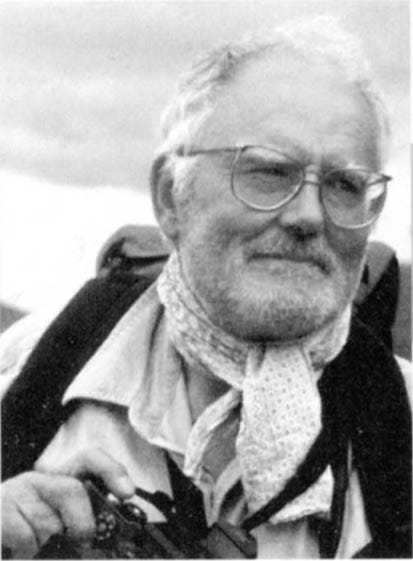
A Photographer’s Appreciation
I met John Cleare often as we overlapped as members of the Guild Committee, but I would call him a friendly colleague rather than a friend. I do, however, fully relate to Roly’s description of him (below) as 'never slow in offering help and advice to younger photographers and writers setting out in the job'. John was for many years chair of the judging panel for the Guild’s Photography Award, and his trenchant but always constructive critiques—delivered in resonant tones—were a regular feature of the presentations. It may have been occasionally uncomfortable for those on the receving end, but it spurred many of us on to do better. We had high standards to try to live up to.
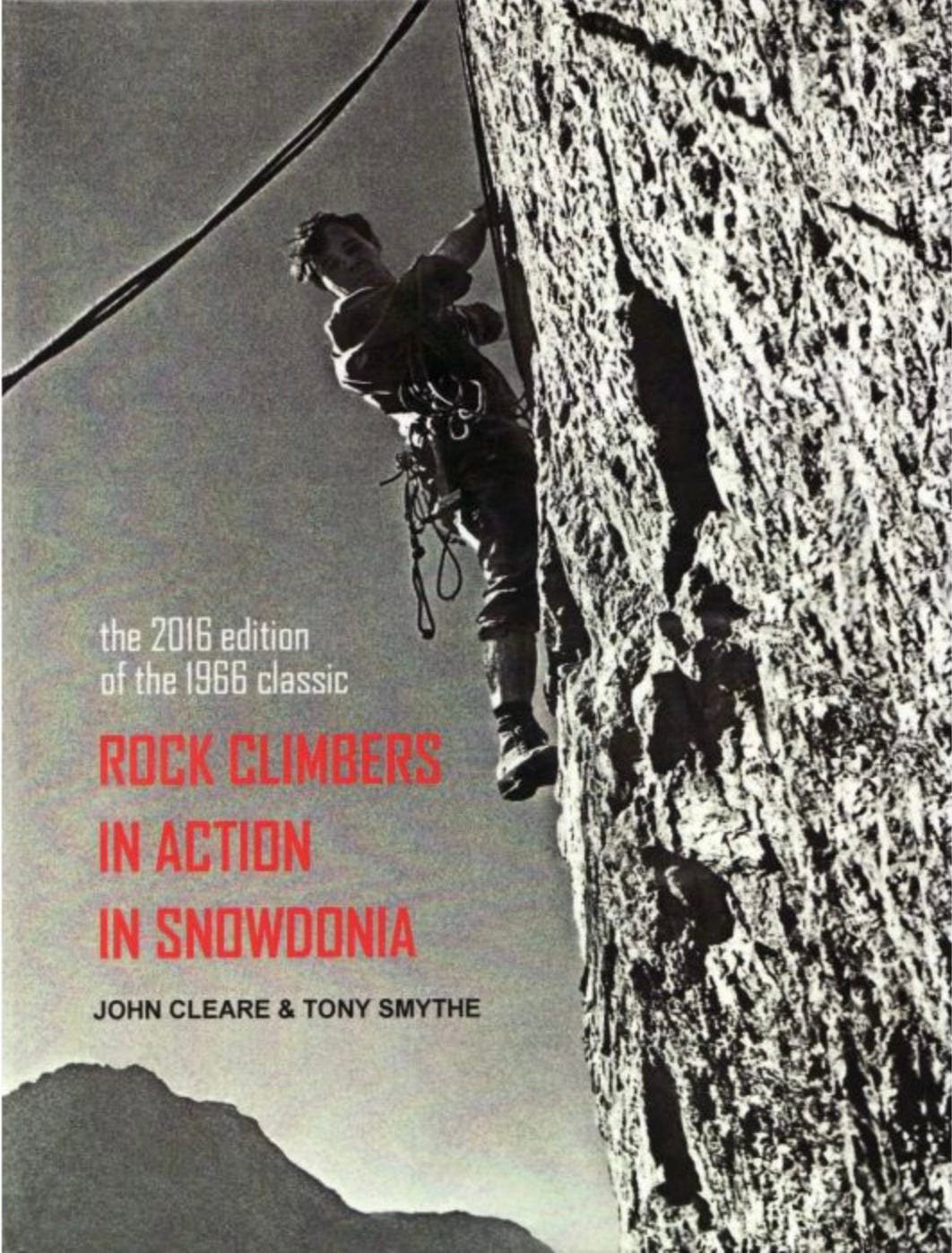
That said, I’d known the name John Cleare long before I even joined the Guild, more or less ever since I started perusing walking and climbing magazines. I first stumbled across Rock Climbers in Action in Snowdonia, when I worked in Lancaster University Library, which hosted the extensive collection of the Fell and Rock Climbing Club. This was probably 20 years after its publication in 1966, but I was still impressed by John’s graphic images in high-contrast black and white, and by the commitment required to capture them.
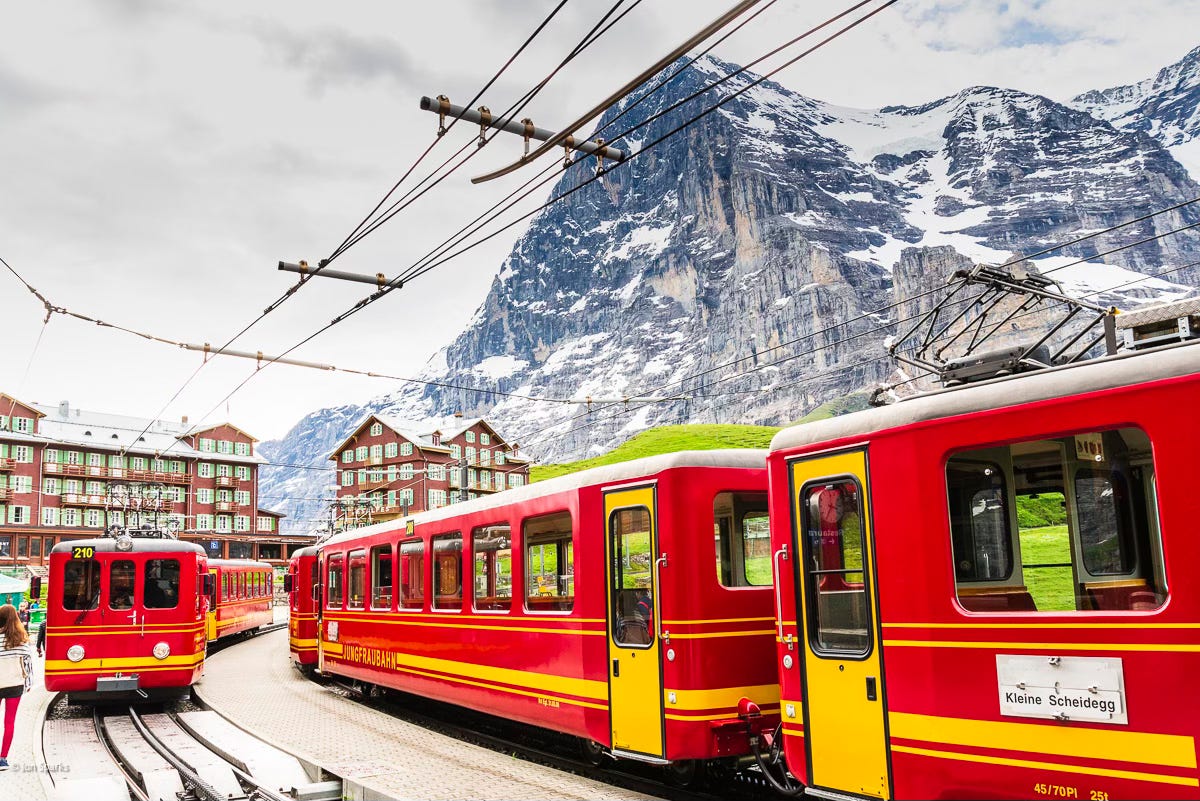
Unlike some sports, you can’t get far in climbing photography without being a pretty decent climber yourself; the higher the crag or peak, the harder the climb, the more this becomes true. This was underlined for me again when, after hearing of his death, I had the impulse to re-watch The Eiger Sanction, Clint Eastwood’s 1975 epic spy movie, on which he was one of the cameramen closest to the action. The film as a whole hasn’t entirely stood the test of time, but the climbing sequences have an authenticity which is lacking in more recent offerings such as Cliffhanger and the woeful Vertical Limit. I gather that the three months spent rehearsing and filming above Grindelwald weren’t the happiest of John’s career, but he was generous in recognising Eastwood’s dedication to authenticity, which stretched to doing almost all his climbing himself, including the ‘cutting the rope’ scene—with painful consequences.
And, yes, having read Roly’s reminiscences which follow, I did look out for John in his cameo appearance; not so much a 'posh English gentleman', as Roly put it, but an upper-class twit.
The man himself was anything but a twit, with or without a camera in hand. His influence on generations of mountain photographers, myself included, was huge, and his body of work fully merits inclusion in any history of climbing photography alongside greats like the Abraham Brothers, Vittorio Sella, and Galen Rowell.
Jon Sparks
Personal Recollections
I first met John Cleare in the late 1980s. when he gave a lecture at Losehill Hall, the former residential study centre of the Peak District National Park. I’d long been an admirer of his work—former Guild president Walt Unsworth had described him as “the outstanding British mountain photographer of the post-war era”—and in our chat afterwards, he turned out to be the kindest, most polite and generous gentleman I’d ever had the pleasure to meet.
So when I signed up to write my first serious hardback book, Walking the Great Views (David & Charles, 1991), and was asked about illustrating it, only one name came to mind. I knew that John had expanded his range into British landscape photography and was delighted when he accepted my invitation. John and I followed up with On Foot in the Pennines (1994) and On Foot in the Yorkshire Dales (1996).
It was the beginning of a 40-year friendship. John and I were polar opposites in almost every respect—in our education, upbringing, politics and love of sports. John once told me, in mock seriousness, that when he became dictator, he would ban all ball games! Yet he was the most loyal and genuine friend and one who was never slow in offering help and advice to younger photographers and writers.
He was also a loyal and hard-working member of the Guild’s committee for ten successful years. As President, I was honoured to present him with the Golden Eagle Award (voted for by members) in 2002, describing him as “simply the best.”
I was privileged to undertake a number of epic trips with him, including to Iceland, and expeditions organised by current Guild Chairman Stan Abbot to Arctic Norway, Svarlbard and the Faroe Islands. But the one I remember most fondly was to my ‘home mountain’—Kinder Scout. Astonishingly, the globetrotting explorer had never been to the high point of the Peak, so I led him on a snowy, winter’s day up Crowden Clough to the magical Woolpacks, and I’ll never forget his response: “Wow,” he exclaimed, “I’ve never seen anything like this before.”
Born in London, John was educated at Wycliffe College, where he was encouraged by inspirational housemaster, A A ‘Bertie’ Robertson. Subsequently, almost every school holiday was spent in the mountains of Wales, the Lakes or Scotland, with Robertson the organiser. “I was completely hooked,” explained John.
When National Service loomed, John volunteered for the Royal Artillery where he gained a commission and learnt the responsibility of leadership. It was about this time that he also became “enthralled” with photography, and when he left the Army, he studied the subject at the Guildford School of Photography. Here he was headhunted by a glossy fashion magazine. He later recalled: “Fleet Street was fascinating, and I learnt to work under pressure and against deadlines.” Now a full-time freelance, he was engaged in commissions for corporate clients and glossy magazines and supplements for many years.
By this time, John was also climbing some of the harder routes in Britain, notably on sea cliffs and in the Alps, with climbing partners like Guild president Chris Bonington, Tom Patey, Joe Brown and Don Whillans1.
As recorded above, Rock Climbers in Action in Snowdonia was published in 1966. It quickly became a cult book and led to John being co-opted into the BBC “Climbing Circus” as climbing cameraman and consultant. He was involved in the major live TV broadcasts from the Old Man of Hoy, Gogarth at Holyhead, Coronation Street at Cheddar Gorge and the summit the Matterhorn to mark the centenary of the 1865 first ascent.
In 1971, John was asked to join an international attempt on the unclimbed South West Face of Everest as climbing cameraman. The attempt ended in failure and tragedy after a 10-day storm and the death of Indian climber Harsh Bahuguna. Subsequently John was recruited by Clint Eastwood for the The Eiger Sanction (see above). John even had a cameo role in the film—being somewhat typecast as a posh English gentleman!
John’s photo library—Mountain Camera—enabled him to sell his pictures worldwide, and lecture tours took him as far as North America, Australia and New Zealand. There were also frequent opportunities for serious mountaineering and John led three expeditions to major Himalayan peaks, including the 1978 British attempt on Himalchuli (7,893m) in Nepal, as well as Mount Kinabalu (4,695m) in Borneo.
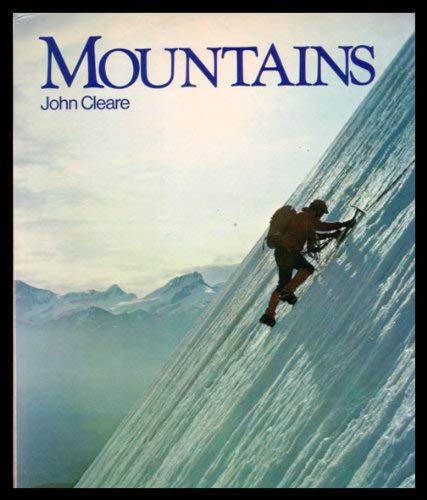
John wrote a dozen books of his own and several more in partnership with other authors. “Holding in my hands a book that I’ve written, illustrated and perhaps designed myself, knowing it will outlast me, is almost as satisfying as climbing a virgin peak,” he confessed.
Approaching 50, John discovered ski-mountaineering, and he ski-toured winter mountains in the Alps and led expeditions to ski up Kedar Dome (6,832m) in India and Muztagh Ata (7,546m) in Chinese Xinjiang.
More recently, John admitted: “Alas, like analogue photography, all that is now in the past; computers and digital cameras have opened exciting new possibilities and made life easy, while I must make do with pedalling my mountain bike over the downs of Wessex. But I have thousands of pictures to whet my memory, so I can hardly complain.”
John died peacefully aged 88 on October 6, after a short period of ill health. His loss will be sadly felt by his second wife Joey, daughter Jos and grandchildren Grace and Jack, and his many friends in the outdoor and climbing world. A public memorial is to be arranged at The Alpine Club, where he was a member for over 60 years and served as a vice-president, and his eagerly awaited autobiography, Cleare Perspectives, will be published by the Scottish Mountaineering Press next year.
Roly Smith (Vice-president of the Outdoor Writers’ and Photographers’ Guild)
Chris Bonington is now the sole survivor of this group.
To my English and Scottish climbing friends who may still remember me and my company Mountain Travel USA, from California. I just wanted to say a word about JOHN CLEARE, who passed away last year, and who was a very dear friend, climbing companion, co-explorer to far away places, such as the source of the Amazon in Peru. He also led a very successful high altitude Mountain Travel expedition to Muztag Ata, 24,750 feet, in far western China. British climber Michael Croucher summited this icy giant with artificial lower legs and crutches as a member of the summit team..
My memoir Trail Blazing the Unknown just came out in California and can be had on www.wanderlustconsulting.com The book contains over 300 lavish color photos, of which John Cleare' contribution is gratefully acknowledged. Thank you all.
Leo Le Bon
author-- Blazing the Unknown, Wanderlust Consulting, Berkeley Ca. 2025
lebontreks@yahoo.com